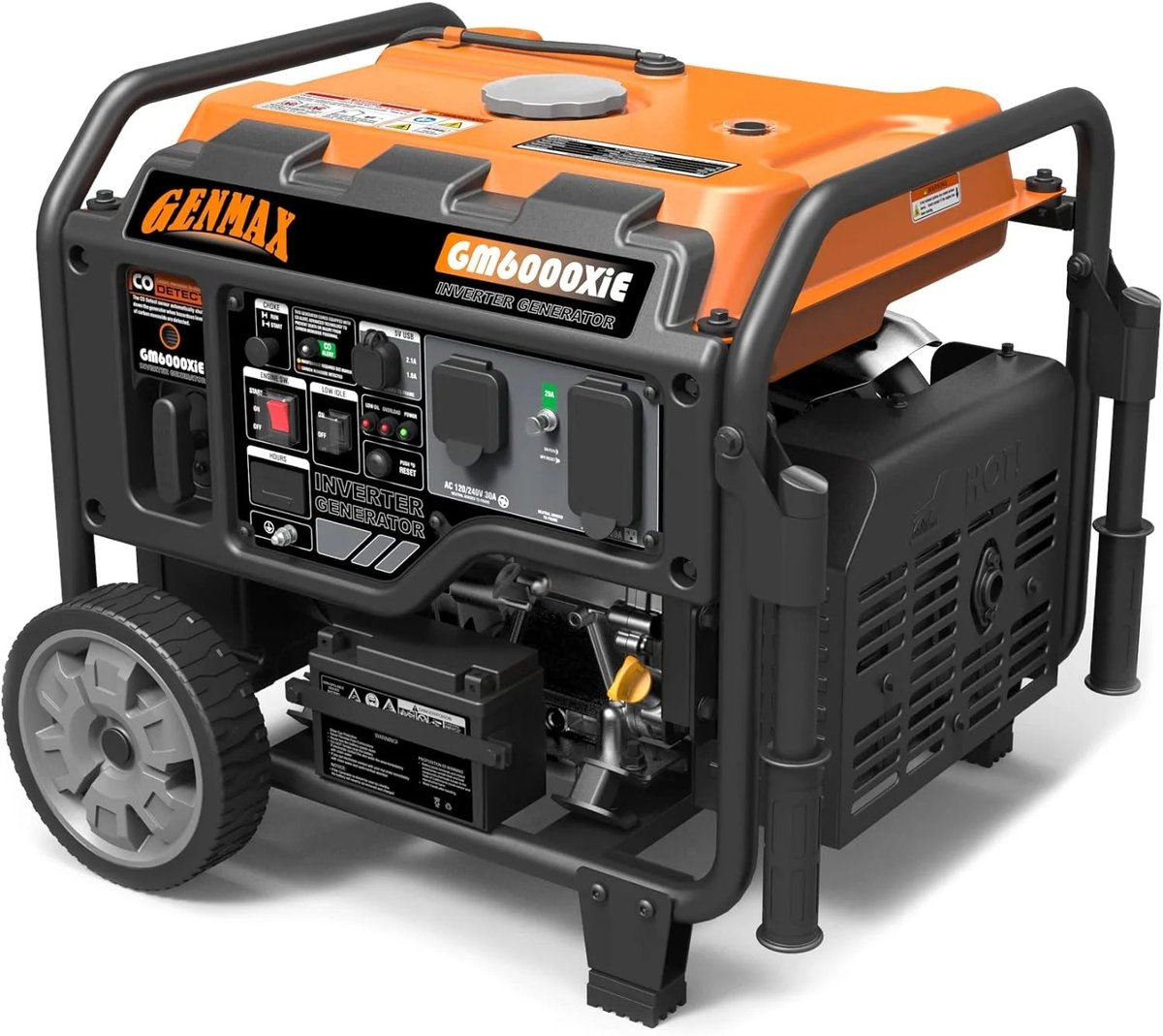
When the lights go out, the tools stop humming, or your RV trip needs a jolt, a portable inverter generator can be a lifeline. But its utility hinges entirely on one critical factor: getting the size right. Diving into Sizing Your Portable Inverter Generator: Power Needs Calculation isn't just about picking a number; it's about ensuring reliable power, protecting your sensitive electronics, and making a smart investment.
Buy too small, and you'll face constant overloads and frustration. Go too big, and you're paying for excess capacity, burning more fuel, and hauling unnecessary weight. This guide will arm you with the knowledge and tools to precisely match a generator to your specific power demands, guaranteeing a seamless and efficient experience every time you fire it up.
At a Glance: Key Takeaways for Sizing Your Generator
- Running vs. Starting Watts: Always calculate both. Running watts are continuous power; starting watts (or surge watts) are the brief, higher burst needed by motor-driven appliances to kick on. Size your generator based on the highest starting wattage of any single appliance, plus the total running wattage of everything else you'll run simultaneously.
- List Everything: Make a comprehensive list of every appliance, tool, or device you intend to power. Don't guess; check wattage labels.
- Prioritize: Decide what's truly essential. You likely won't run everything at once.
- Consider Usage: Will you be camping, backing up your home, or powering a job site? This determines the type and size you need.
- Clean Power Matters: Inverter generators provide "clean power," which is crucial for sensitive electronics like laptops, smartphones, and some medical devices.
- Don't Forget Altitude: Generators lose about 3% of their power for every 1,000 feet of altitude above sea level.
- Safety First: Always operate generators outdoors, away from windows and doors, with proper ventilation.
The Pitfall of "Good Enough": Why Accurate Sizing Isn't Optional
Imagine pulling up to your campsite, excited for a weekend getaway, only to find your new generator can't even power your RV's air conditioner. Or perhaps you're in a power outage, and your "backup" generator trips circuit breakers every time you try to run the fridge and a microwave simultaneously. These aren't just minor inconveniences; they're symptoms of improper generator sizing, leading to wasted money, damaged equipment, and a whole lot of stress.
An undersized generator will struggle under load, leading to reduced lifespan, potential damage to its engine, and frustrating power interruptions. Overloading can even cause damage to the connected appliances. On the flip side, an oversized generator means you've spent more than necessary, you're lugging around a heavier machine, and you're burning more fuel for power you don't even use. It’s about finding that sweet spot for efficiency and reliability.
Decoding the Language of Power: Watts, Surges, and What They Mean
Before we crunch numbers, let's get clear on the terms you'll encounter. Generators are rated in watts (W), which is the unit of electrical power. Think of watts as the "work" an appliance does.
- Running Watts (or Continuous Watts): This is the power an appliance needs to operate continuously once it's already on. It's the steady-state demand.
- Starting Watts (or Surge Watts): Many motor-driven appliances (like refrigerators, air conditioners, and power tools) require a brief, extra burst of power to start up. This surge can be 2-3 times their running wattage, lasting only a few seconds. It's often the most critical number when sizing.
For example, a window AC unit might need 800W to run, but a whopping 1,600W to kick on. Your generator needs to handle that 1,600W surge, even if only for a moment, to get the AC going. Once it's running, the demand drops back to 800W.
Your 3-Step Power Audit: Calculating Your Generator Needs
This is where the rubber meets the road. Follow these steps for an accurate assessment.
Step 1: Identify Your Primary Power Needs (Your "Why")
Your generator's purpose dictates its overall type and general size.
- Recreational Use (Camping, Tailgating, RVing): You'll likely prioritize portability and quiet operation. Think lights, phone chargers, small appliances, and maybe a modest RV A/C.
- Typical Range: 1,000-2,200W (Small Inverter) to 2,300-4,000W (Medium Inverter)
- Essential Home Backup: During an outage, what absolutely must stay on? Refrigerator, a few lights, phone charging, maybe a fan or small microwave. You'll likely need to choose which larger appliances to run at different times.
- Typical Range: 4,000-8,000W (Large Portable) for critical circuits, potentially up to 8,000-15,000W (Extra Large Portable) for more comprehensive partial home backup.
- Job Site / Power Tools: Here, the focus is on robust power for heavy-duty tools. Noise might be less of a concern than raw power and durability.
- Typical Range: 4,000-8,000W (Large Portable) or higher, depending on the number and type of tools.
Step 2: List Every Appliance and Its Wattage
This is the most crucial step. Grab a pen and paper, or open a spreadsheet.
- List: Write down every single appliance, tool, or device you might want to power simultaneously. Be realistic.
- Find Wattage: For each item, look for the wattage (W) listed on its label, owner's manual, or the manufacturer's website. You need two numbers: Running Watts and Starting Watts.
- If only one number is listed, assume it's running watts for simple electronics, or both running and starting for resistive loads (like heaters, which don't have motors).
- If you can't find specific starting watts for a motor-driven appliance, you can estimate it as 2-3 times the running watts.
- Use a Reference: Here’s a quick reference for common appliances, but always check your specific device:
| Appliance | Running Watts (W) | Starting Watts (W) (approx.) |
| :-------------------- | :---------------- | :--------------------------- |
| Space Heater | 1,500 | 1,500 |
| Window AC (8,000 BTU) | 800 | 1,600 |
| Portable Fan | 100 | 200 |
| Mini Refrigerator | 400 | 800 |
| Microwave Oven | 1,000 | 1,000 |
| Coffee Maker | 1,000 | 1,000 |
| Average Power Tool | 800 | 1,200 |
| Job Site Light | 500 | 500 |
| Laptop Charger | 50 | 50 |
| Phone Charger | 10 | 10 |
| LED Lights (per bulb) | 10-20 | 10-20 |
Step 3: Calculate Your Total Wattage Needs
This is where the magic happens. You'll determine two critical numbers:
- Total Running Watts: Add up the running watts for all the appliances you plan to operate at the same time. This is your continuous power demand.
- Maximum Starting Watts: Identify the appliance with the highest starting wattage from your list. This is the single largest power surge your generator will need to handle.
The Formula:
Your required generator running wattage = Total Running Watts (of all simultaneous items)
Your required generator starting wattage = Total Running Watts (of all simultaneous items minus the item with the highest starting watts) + Highest Starting Watts (of that one specific item)
Example Scenario: Essential Home Backup
Let's say during an outage, you must run:
- Refrigerator: 400W running / 800W starting
- LED Lights (total): 100W running / 100W starting
- Phone Charging: 20W running / 20W starting
- Microwave: 1,000W running / 1,000W starting (occasionally)
Calculation:
- List potential simultaneous items: Refrigerator, Lights, Phone Charging. (You wouldn't typically run the microwave continuously with these).
- Total Running Watts for continuous items:
- Refrigerator: 400W
- LED Lights: 100W
- Phone Charging: 20W
- Subtotal = 520W
- Identify the highest starting wattage among all items you might run, even if not simultaneously:
- Refrigerator: 800W
- Microwave: 1,000W
- Highest Starting Wattage = 1,000W (Microwave)
- Calculate the Required Generator Starting Watts:
- Assume the microwave is the last item you turn on, and it has the highest surge.
- Total Running Watts of everything else currently on (Refrigerator + Lights + Phone) = 520W
- Highest Starting Wattage (Microwave) = 1,000W
- Required Generator Starting Watts = 520W + 1,000W = 1,520W
Conclusion for this example: You'd need a generator capable of at least 520 running watts and 1,520 starting watts. A 2,000W inverter generator (typically 2,000 starting / 1,600 running) might just fit, but a 2,200W or 2,500W unit would offer more headroom.
Using an Online Generator Sizing Calculator
While the manual calculation gives you a strong understanding, a good online generator sizing calculator can simplify this process significantly. These tools typically ask you to select your primary use (Recreational, Home, Job Site) and then choose appliances from a list. They’ll automatically handle the running and starting wattage calculations, even factoring in the largest surge. This can be especially helpful if you have a long list of items or want to experiment with different combinations.
Beyond the Watts: Essential Features to Consider
Once you have your wattage numbers, it's time to refine your choice with other critical features.
Power Output Type: Clean Power for Sensitive Tech
- Standard Power: Traditional generators produce power with more fluctuations, which can be harmful to sensitive electronics.
- Clean Power (Inverter): Inverter generators produce a much "cleaner" sine wave, mimicking utility power. This is essential for laptops, smartphones, tablets, medical devices, and modern appliances with microprocessors. If you're powering anything with a circuit board, an inverter generator is non-negotiable.
- Dual-Mode: Some generators offer both standard and clean power options, allowing you to switch based on your needs.
Portability: Haul It or Roll It?
Consider how and where you'll be moving your generator.
- Weight: Small inverter generators (1,000-2,200W) are often light enough (30-60 lbs) for one person to carry.
- Wheels & Handles: Medium to extra-large units will have integrated wheels, telescoping handles, or fold-down handles for easier transport. Look for sturdy designs.
- Lifting Points: Job site models might have specific lifting points for forklifts or cranes.
Noise Levels: Keep the Peace
Generator noise is measured in decibels (dB).
- Quiet (50-60 dB): Typically inverter generators, perfect for camping, RVing, or residential backup where noise is a concern. This is comparable to a normal conversation.
- Moderate (60-70 dB): Standard portable generators, acceptable for construction sites or emergencies where neighbors aren't immediately nearby.
- Loud (70+ dB): Larger, industrial-grade models, often too noisy for recreational or residential use.
Fuel Type: The Power Source Choice
- Gasoline: Most common, widely available, generally provides higher power output for its size. Downside: shorter shelf life (can go stale in 3-6 months), requires stabilizers.
- Propane: Longer shelf life (virtually indefinite), cleaner burning (less maintenance, fewer emissions), easy to store in tanks. Downside: generally less fuel-efficient (burns more to produce the same power), performance can dip in very cold weather.
- Dual Fuel: Offers the best of both worlds, letting you switch between gasoline and propane. This provides flexibility and a backup fuel option if one isn't available. Often comes at a higher initial cost.
Altitude Adjustment: The Thin Air Effect
Generators rely on oxygen for combustion. At higher altitudes, the air is thinner, meaning less oxygen. For every 1,000 feet above sea level, your generator will lose approximately 3% of its power output. If you're planning to use your generator in mountainous regions, factor this into your sizing calculations (e.g., if you need 3,000W at 5,000 feet, you'll need a generator rated for closer to 3,450W at sea level).
Connection Options: Plugging In
Check the types of outlets your generator offers to ensure compatibility with your devices.
- 120V Household Outlets (NEMA 5-15R/5-20R): Standard three-prong outlets for most appliances and tools.
- 120/240V Outlets (NEMA L14-30R, 14-50R): For higher power equipment or connecting to a home's transfer switch.
- USB Ports: Convenient for directly charging phones, tablets, and other small electronics.
- RV Ready Outlets (TT-30R): Specifically designed for direct connection to RVs, often found on medium-sized inverter generators (e.g., those rated 3,500W and up). Most RV A/C units need 2,800-3,500 starting watts, so generators with RV-ready outlets are often sized appropriately.
Safety First: Non-Negotiable Rules for Generator Use
A powerful tool demands respect. Always follow these safety guidelines to prevent accidents:
- Outdoor Use ONLY: Never operate a generator indoors, in garages, sheds, or any enclosed space. Carbon monoxide (CO) is a silent, odorless killer.
- Ventilation is Key: Place generators at least 20 feet from your home, away from windows, doors, and vents that could allow exhaust fumes to enter your living spaces. Position it on level, dry ground, protected from direct weather.
- Fuel Safety:
- Store fuel in approved containers, away from living areas and direct sunlight.
- Never refuel a hot or running generator. Allow it to cool down completely.
- Use only fresh fuel. Stale fuel can damage the engine.
- Keep a fire extinguisher nearby.
- Electrical Safety:
- Plug appliances directly into the generator or use heavy-duty, outdoor-rated extension cords that are properly grounded.
- Never "backfeed" power into your home's electrical system without a professionally installed transfer switch. This can electrify power lines and harm utility workers.
- Child and Pet Safety: Keep children and pets away from the generator, as it can be hot and noisy.
Keeping Your Powerhouse Primed: Essential Maintenance Tips
Just like any engine, a portable generator needs regular care to perform reliably when you need it most.
- Before Each Use:
- Check the oil level and top up if necessary.
- Inspect the air filter for dirt or debris.
- Ensure the fuel tank is adequately filled with fresh fuel.
- Test the start system (electric start battery, pull cord).
- Monthly (or after heavy use):
- Run the generator for at least 30 minutes under a moderate load to circulate fluids and keep components lubricated.
- Check the battery condition (if electric start).
- Inspect fuel lines for cracks or leaks.
- Every 6 Months (or after extended use):
- Change the engine oil.
- Clean or replace the air filter.
- Inspect and clean or replace the spark plug.
- Long-Term Storage:
- Add a fuel stabilizer to the tank, then run the generator until it runs dry (this prevents fuel varnish buildup).
- Change the oil.
- Remove the battery (if applicable) and store it in a cool, dry place.
- Clean the exterior and cover the generator to protect it from dust and moisture.
Frequently Asked Questions About Generator Sizing and Use
Here are quick answers to common queries to further refine your understanding.
How long can a portable generator run on a full tank?
Run time varies significantly based on the generator's load (e.g., 25% vs. 100% capacity), the size of its fuel tank (typically 1-10 gallons), and its fuel efficiency. A common range is 8-20 hours at 50% load. Inverter generators are generally more fuel-efficient due to their ability to throttle the engine speed based on demand.
Can I run my RV A/C with a portable generator?
Yes, but you need the right size. Most RV A/C units require between 2,800-3,500 starting watts. Look for generators rated 3,500W or higher, and ideally, an inverter generator for the clean power needed by RV electronics and quieter operation. Ensure it has an RV-ready (TT-30R) outlet.
What's the difference between running watts and starting watts, and why is it important for sizing?
Running watts are the continuous power an appliance needs once it's on. Starting watts are the brief, higher surge required by motor-driven appliances (like fridges or A/C units) to kick-start. It's crucial for sizing because your generator must be able to handle the highest starting wattage of any single appliance you might turn on while other items are already running. Failing to account for starting watts will lead to overloads.
How should I store my portable generator?
For short-term storage, add a fuel stabilizer to the gas, then run the generator until it consumes all the fuel and runs dry. Allow it to cool before storing. For long-term storage (over 30 days), it's best to completely drain the fuel system, change the oil, remove the battery, and cover the unit. Store it in a dry, protected location.
What's the best fuel type for a portable generator?
There's no single "best" type; it depends on your priorities:
- Gasoline: Most common, readily available, but has a shorter shelf life and requires stabilization.
- Propane: Longer shelf life, cleaner burning, lower maintenance, but less energy-dense (you'll use more of it for the same power).
- Dual Fuel: Offers the most flexibility by letting you switch between gasoline and propane, providing a backup option, though often at a higher initial cost.
Making Your Choice with Confidence
Sizing your portable inverter generator might seem like a daunting task, but by systematically identifying your needs, listing your appliances, and calculating both running and starting watts, you can approach the purchase with confidence. Remember to factor in crucial elements like clean power for sensitive electronics, portability, noise levels, and fuel type.
A properly sized generator is more than just a piece of equipment; it's peace of mind, whether you're off-grid, preparing for emergencies, or tackling projects far from an outlet. Do your homework, perform your power audit, and you’ll choose a generator that delivers reliable power exactly when and where you need it.