In an increasingly unpredictable world, reliable portable power isn't just a luxury; it's a necessity. Whether you're planning an off-grid adventure, preparing for a power outage, or simply need juice for tools far from an outlet, choosing the right solution is paramount. This guide is your definitive resource for Comparing Inverter Generators to Other Portable Power Solutions, particularly focusing on the two leading contenders: inverter generators and portable power stations. We'll cut through the jargon, lay out the facts, and help you decide which system best fits your life, your budget, and your power demands.
Powering Up: At a Glance
Navigating the world of portable power can feel overwhelming. Here’s a quick rundown of the fundamental differences between inverter generators and portable power stations to set the stage:
- Inverter Generators (IGs): Engine-driven, run on fuel (gasoline, propane, diesel), produce exhaust, require outdoor use, generally louder, but offer potentially unlimited runtime with refueling.
- Portable Power Stations (PPSs): Battery-powered, emission-free, near-silent, safe for indoor use, rechargeable via wall, car, or solar, with finite (but often expandable) capacity.
- Key Choice Factors: Consider your need for indoor/outdoor use, noise tolerance, runtime expectations, maintenance willingness, and environmental impact.
Demystifying Portable Power: Core Definitions
Before diving into the direct comparison, let's establish what each of these powerhouses brings to the table. Understanding their fundamental mechanics will clarify why they suit different applications.
What is an Inverter Generator?
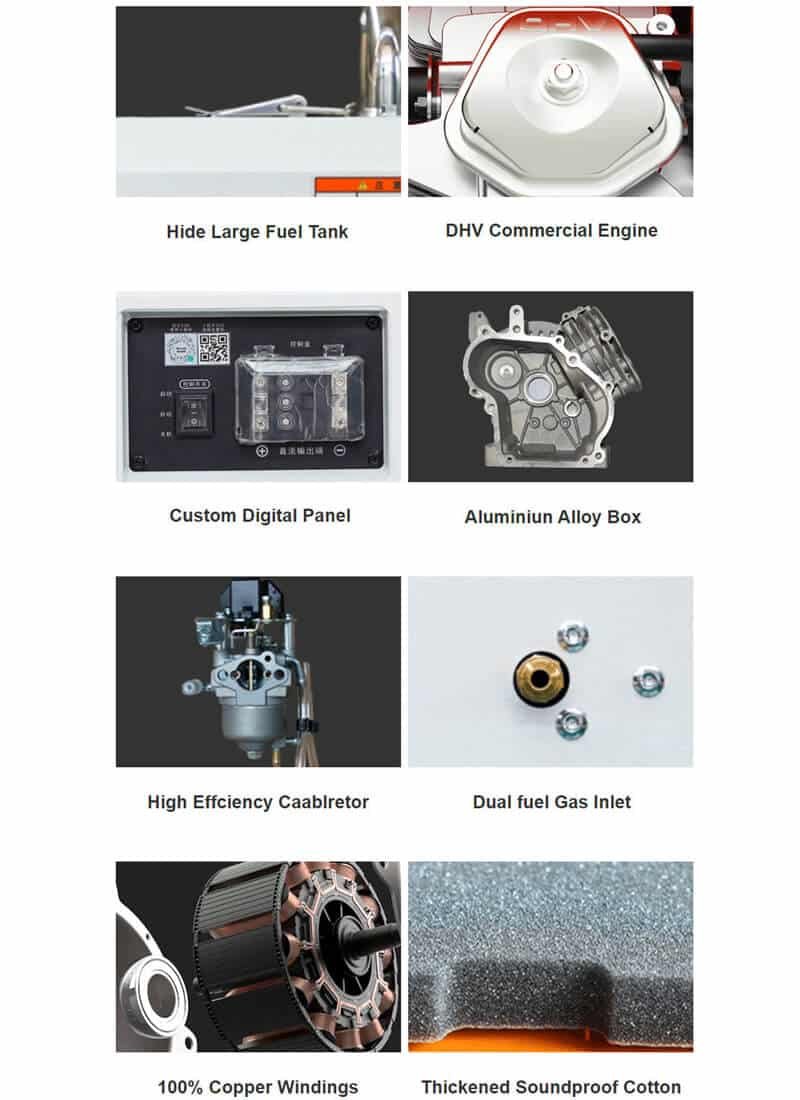
Imagine a traditional generator, but smarter, quieter, and more efficient. An Inverter Generator (IG) starts with an internal combustion engine, similar to a lawnmower, that spins an alternator to produce raw AC power. However, unlike traditional generators, an IG then converts this AC power to DC, meticulously "cleans" it, and finally inverts it back into clean, stable AC power – specifically, a pure sine wave. This multi-step process results in electricity that's safe for even the most sensitive electronics, from laptops to medical devices. Because they are engine-driven, they require fuel and produce exhaust gases, including carbon monoxide (CO).
What is a Portable Power Station?
Think of a Portable Power Station (PPS) as a giant, smart battery pack designed to power a wide array of devices. It's a self-contained unit featuring a high-capacity rechargeable battery (often durable LiFePO₄ chemistry), a built-in inverter for converting DC battery power to AC wall power, and numerous output ports (standard AC outlets, USB-A, USB-C, 12V DC). PPS units are incredibly versatile, charging up via standard wall outlets, your vehicle's 12V charger, or efficiently through solar panels thanks to integrated MPPT (Maximum Power Point Tracking) technology. Their key advantages are silent operation and zero direct emissions, making them perfectly safe for indoor use.
The Ultimate Showdown: Inverter Generators vs. Portable Power Stations
Now that we have our definitions, let’s pit these two power solutions against each other, examining the critical factors that will shape your decision.
Inside or Out? Emissions and Safety
This is arguably the most significant differentiator.
- Inverter Generators: Because IGs burn fuel, they produce hazardous tailpipe gases, most notably deadly carbon monoxide (CO). This means they must operate strictly outdoors, positioned at least 15–20 feet away from any building openings like windows or doors. Using a CO detector is non-negotiable for anyone operating an IG, even outdoors. The risk is too high to ignore.
- Portable Power Stations: PPS units operate purely on battery power, generating zero point-of-use emissions. This makes them inherently safe for indoor use, whether in your living room during a blackout, inside a tent on a rainy camping trip, or within your RV's interior. This clean operation is a massive advantage for home backup, quiet camping, and any scenario where fumes are unacceptable.
Silence vs. Roar: Noise Levels Compared
The sound your power source makes can dramatically impact your experience.
- Inverter Generators: While significantly quieter than traditional open-frame generators, inverter generators still produce audible noise, typically ranging from 50–65 dB when measured at 7 meters (about 23 feet). This is comparable to a normal conversation or a running dishwasher. It's acceptable for a job site or remote camping, but might be disruptive in quiet campgrounds, residential areas, or for continuous use.
- Portable Power Stations: These units are a dream for anyone who values peace and quiet. With no engine, their operation is near-silent, producing only minimal fan noise (usually below 30 dB) when under heavy load or during rapid charging. This makes them ideal for situations where silence is golden, such as tent camping, powering a backyard movie night, or providing backup power in an apartment.
Runtime, Capacity, and Power Delivery
Understanding how long your devices can run and how much power they can draw is crucial for proper sizing.
- Inverter Generators: IGs offer potentially unlimited runtime, provided you have a continuous supply of fuel. A typical fuel tank might last anywhere from 5 to 20 hours, depending on the load and model. They commonly provide 1,000 to 4,000 watts (1–4 kW) of continuous power and are excellent at handling significant surge loads for motor-driven appliances. For instance, an RV air conditioner might require 2,500–3,000 watts just to start, a capability many IGs handle effortlessly.
- Portable Power Stations: PPS units have a finite battery capacity, measured in watt-hours (Wh) or kilowatt-hours (kWh). Capacities range widely, from small units (200 Wh) up to massive home backup systems (27 kWh) with modular expansion. They offer continuous output from 200W up to 6,000W or more. Surge capacity is model-dependent, often rated at 2x their continuous output (e.g., a 2,000W unit might surge to 4,000W). Runtime is determined by battery size and device draw, and is extended through recharging from various sources.
Fueling Your Power: Sources and Charging
How you power up your solution is a key logistical consideration.
- Inverter Generators: Rely on fossil fuels—most commonly gasoline, but many are dual-fuel (gasoline and propane) or diesel. Refueling is quick, typically taking only minutes. However, this requires fuel storage, which can be bulky and hazardous, and depends on fuel availability, which can be an issue during widespread outages. Gasoline also has a limited shelf life (3–6 months without stabilizer).
- Portable Power Stations: These units are incredibly versatile in their charging options. They charge fastest via an AC wall outlet (many modern models can go from 0–80% in under an hour). Slower, but convenient, charging comes from a 12V car charger (8–20 hours). For eco-conscious or off-grid users, solar panels are a fantastic option, recharging the PPS over several hours to a day, depending on panel wattage and sun exposure. You can even charge a PPS from an inverter generator!
Keep It Running: Maintenance and Lifespan
Consider the ongoing effort and longevity of your investment.
- Inverter Generators: As engine-driven devices, IGs demand regular maintenance. This includes oil changes every 50–100 hours of use, spark plug replacements, air filter cleaning/replacement, and fuel stabilization for storage. Neglecting these tasks can lead to performance issues or premature failure.
- Portable Power Stations: PPS units require minimal maintenance. The primary concern is battery care: using LiFePO₄ batteries, which typically offer 3,000–4,000+ full charge cycles before significant degradation. It's best to store them at 50–80% charge and operate/store them within a temperature range of 0°C to 40°C (32°F to 104°F) for optimal lifespan. No oil changes, no spark plugs, just occasional cleaning and smart charging.
The Real Cost: Upfront vs. Operating
The initial purchase price is just one piece of the puzzle.
- Inverter Generators: Upfront costs generally range from $500–$2,000+. However, ongoing fuel costs are significant, ranging from $0.50–$1.50 per liter, which can translate to an effective cost of $0.96 per kWh or more depending on fuel prices and efficiency. Add to that the cost of oil, filters, spark plugs, and fuel stabilizer, and the long-term operating costs can be substantial, often $50–$200 per year for heavy use.
- Portable Power Stations: Initial purchase prices are often higher, from $300 for small units to $4,000+ for large, expandable systems. However, their operating costs are generally much lower. When charged from the grid, electricity is significantly cheaper per kWh than gasoline. When paired with solar panels, the marginal cost of power becomes near-zero after the initial investment in the panels. This makes PPS units generally more cost-effective over their lifespan, especially with the longevity of LiFePO₄ batteries.
Move It Around: Portability Considerations
How easy is it to transport your power solution?
- Inverter Generators: Typically bulkier and heavier, ranging from 40–100+ lbs (18–45 kg) due to their engine, fuel tank, and robust frame. They often require two hands or wheels for transport, and careful handling is needed to prevent fuel spills.
- Portable Power Stations: While some high-capacity models can be hefty (20–150 lbs / 9–68 kg), they are generally more compact for their power output. Many smaller and medium-sized units are designed with ergonomic handles, while larger ones often come with built-in wheels or trolley systems, making them easier to move without the risk of fuel spills.
Clean Power for Sensitive Devices
Both modern solutions deliver high-quality power.
- Power Quality: Both modern inverter generators and portable power stations produce pure sine wave output. This is crucial because it means the electricity they provide is clean, stable, and safe for all sensitive electronics, including smartphones, laptops, medical devices, and sophisticated appliances. You won't have to worry about damaging your gear with either option.
Sizing Your Needs: How Much Power Do You Really Require?
One of the biggest mistakes people make is underestimating their power needs. Don't fall into that trap! Here’s a practical framework for sizing your system.
- List Your Loads: Start by identifying every device you plan to power. For each, find its running watts (what it consumes continuously) and starting (surge) watts (the brief spike of power needed to kick on motor-driven appliances like refrigerators, microwaves, or air conditioners). This information is usually found on the appliance label or in its manual.
- Compute Peak Requirement: Your power source must be able to handle the highest simultaneous surge demand. Add up the running watts of all devices you expect to use at once, then add the single largest starting watt requirement from any motor-driven appliance that might kick on during that period. This gives you your absolute peak wattage needed.
- Estimate Energy (Wh): To figure out your battery capacity needs (for a PPS) or fuel consumption (for an IG), calculate the total watt-hours (Wh) you'll need over your desired runtime.
- Formula: Power (Watts) × Hours of use × Duty Cycle (for intermittent devices).
- Example (Fridge + Lights + Wi-Fi for 8 hours):
- Mini-fridge: 80W running, 800-1200W starting. Runs ~1/3 of the time. (80W * 8h * 0.33) = ~211 Wh
- LED Lights: 30W * 8h = 240 Wh
- Wi-Fi Router: 20W * 8h = 160 Wh
- Laptop (charging): 60W * 4h = 240 Wh (assume 4 hours of charging)
- Total Energy Needed: Approximately 851 Wh.
- Peak Surge Needed: If the fridge kicks on while other items are running, you'd need ~1,200 W surge capacity.
- Conclusion: A ~1-1.2 kWh PPS or a modest IG would be suitable for this example.
- Example (RV Air Conditioner):
- A 13,500 BTU RV AC typically runs at ~1,300 W.
- It needs a starting surge of ~2,500–3,000 W (which can sometimes be reduced with a soft-start module).
- Conclusion: A 2–3 kW portable inverter generators or a high-surge PPS (potentially in a hybrid setup) is often recommended. If running an AC for several hours, the Wh requirements will quickly climb (e.g., 1,300W * 8h = 10,400 Wh or 10.4 kWh).
- Add a Safety Buffer: Always build in a 20–30% inverter headroom. This prevents nuisance trips, accounts for inefficiencies, and gives you flexibility for unforeseen needs.
Your Power Playbook: When to Choose What
Now for the actionable advice: based on your specific needs, here’s a decision framework.
Choose a Portable Power Station if You:
- Need Indoor or Quiet Power: Essential for apartments, RVs (especially in quiet-hour parks), tents, or residential home backup where noise and fumes are unacceptable.
- Prioritize Clean, Emission-Free Operation: Ideal for sensitive environments, health considerations, or eco-friendly lifestyles.
- Prefer Low Maintenance: No oil changes, fuel stabilization, or engine tune-ups. Just charge and go.
- Value Solar Charging: Seamless integration with solar panels for sustainable, free energy.
- Power Sensitive Electronics: Pure sine wave output ensures safety for all your gadgets.
- Require a Simple, Safe Setup: Plug-and-play operation with no fuel handling risks.
- Have Low-to-Moderate, Intermittent Loads: Perfect for lights, fans, laptops, medical devices, fridges, and short-term appliance use.
Choose an Inverter Generator if You:
- Require High Continuous Power for Long Periods: Indispensable for multi-day outages, powering large RV loads (like multiple ACs), or job sites with heavy-duty tools.
- Expect Multi-Day Runtime: Unlimited runtime potential with access to fuel is a key advantage.
- Operate Primarily Outdoors: Perfect for remote cabins, construction sites, tailgating, or large properties away from populated areas.
- Can Manage Fuel Logistics and Maintenance: Willing to handle fuel storage, refueling, and regular engine service.
- Need to Power Heavy Starting Loads: Often more cost-effective for powering high-surge motor-driven equipment.
Choose Both (The Hybrid Approach) if You:
- Desire Quiet Indoor Power with Unlimited Runtime Potential: This is the best-of-both-worlds scenario.
- Live in a Suburban Home or RV: Use the PPS for silent overnight power for essential circuits, then recharge it with the IG during the day when noise is less disruptive (or when using heavy appliances).
- Need Flexibility for Diverse Needs: Tackle heavy loads with the IG, then switch to the PPS for lighter, quiet operation, extending battery life and reducing fuel consumption.
- Want to Maximize Efficiency and Convenience: Charge your PPS with your IG, then turn the IG off. You save on fuel and get quiet power.
Owning Your Power: Costs Beyond the Sticker Price
Understanding the full financial picture is crucial for a wise investment.
Upfront Costs
- Inverter Generators: You can find basic models for around $500, with more powerful or feature-rich options going up to $2,000+.
- Portable Power Stations: Prices vary widely based on capacity and inverter output, from $300 for small units (a few hundred Wh) to $4,000+ for large, expandable systems (several kWh). If you add solar panels, that's an additional upfront cost, typically $100-$300 per 100W panel.
Operating Costs
- Inverter Generators: The biggest ongoing cost is fuel. Depending on local prices and how much power you're drawing, this can easily add hundreds of dollars per year if used frequently. Add in oil, filters, spark plugs, and stabilizer, and the costs accumulate.
- Portable Power Stations: The cost per kWh when charging from the grid is typically much lower than buying gasoline. With solar panels, your marginal operating cost can be near-zero, making them incredibly economical in the long run. The primary operating cost is the eventual replacement of the battery after thousands of cycles, but with LiFePO₄, that's many years down the road.
Safety First: Essential Guidelines
Regardless of your choice, safety should always be your top priority.
Inverter Generator Safety:
- Never Indoors: This cannot be stressed enough. Carbon monoxide is an odorless, colorless, lethal gas. Operating an IG indoors, in a garage, or even too close to windows can be fatal.
- Proper Placement: Always place your generator at least 15–20 feet away from any building openings, ensuring the exhaust is directed away from homes or vents.
- CO Alarms: Install and maintain battery-operated carbon monoxide alarms in any occupied areas where a generator is in use nearby.
- Fuel Storage: Store fuel safely in approved containers, away from ignition sources and out of reach of children. Rotate your gasoline stock frequently or use a fuel stabilizer to prevent degradation.
Portable Power Station Safety:
- Indoor Safe: They are inherently safe for indoor use due to zero emissions.
- Temperature Matters: Avoid charging LiFePO₄ batteries below 0°C (32°F) unless the unit explicitly has a self-heating feature for cold-weather charging. Extreme cold can damage the battery.
- Ventilation: Keep vents clear to prevent the unit from overheating, especially during heavy use or rapid charging.
- Quality Cords: Always use heavy-gauge extension cords appropriate for the power draw and follow all manufacturer guidelines for charging and operation.
Separating Fact from Fiction: Common Misconceptions
There's a lot of misinformation out there about portable power. Let's clear up a few popular myths.
- "Generators are always cheaper." While the upfront cost of some IGs can be lower, their ongoing fuel and maintenance costs often make them more expensive in the long run, especially compared to PPS units charged with solar power.
- "Batteries can’t run fridges." This is false. With adequate sizing (e.g., 1 kWh or more for a standard fridge), a PPS can run a refrigerator for many hours, especially if it's an energy-efficient model. The key is to size for both running and surge watts, and to understand the refrigerator's duty cycle.
- "Solar alone easily powers AC." While technically possible, running an air conditioner purely off solar requires a substantial and often costly solar panel array and a very large battery bank. AC units are high-power consumers. For most casual users, relying solely on solar for AC is impractical without significant investment. Hybrid solutions often make more sense here.
- "Portable Power Stations are just giant phone chargers." While they can charge phones, their built-in inverters and high capacities are designed to power appliances and tools that plug into standard wall outlets, making them much more robust than a simple power bank.
Making the Smart Choice for Your Power Needs
The landscape of portable power has evolved dramatically. While the traditional image of a roaring, gas-guzzling generator still comes to mind for some, portable power stations have emerged as a powerful, versatile, and often superior alternative for a vast majority of users.
For most people, the benefits of a portable power station are compelling: silent, emission-free, indoor-safe operation, minimal maintenance, and the seamless integration with solar power for incredibly low long-term operating costs. They offer unparalleled convenience for camping, remote work, RV life (especially in quiet-zone parks), and providing essential home backup during short-to-medium duration outages.
Inverter generators certainly retain their niche. They are irreplaceable when you need extremely high continuous power for extended periods in outdoor or remote environments where fuel access is assured and noise/emissions are less of a concern – think heavy-duty job sites or multi-day off-grid expeditions far from any charging infrastructure.
Ultimately, for maximum flexibility and resilience, a hybrid approach often represents the most robust solution. Using an inverter generator to quickly recharge a portable power station during the day, then running on silent battery power through the night, combines the best attributes of both systems.
When considering your next portable power solution, think critically about your daily needs, your environment, and your tolerance for noise and maintenance. For the majority, a portable power station, particularly when paired with solar panels, offers a smarter, cleaner, quieter, and more cost-effective long-term investment that aligns with modern sensibilities and sustainability goals.