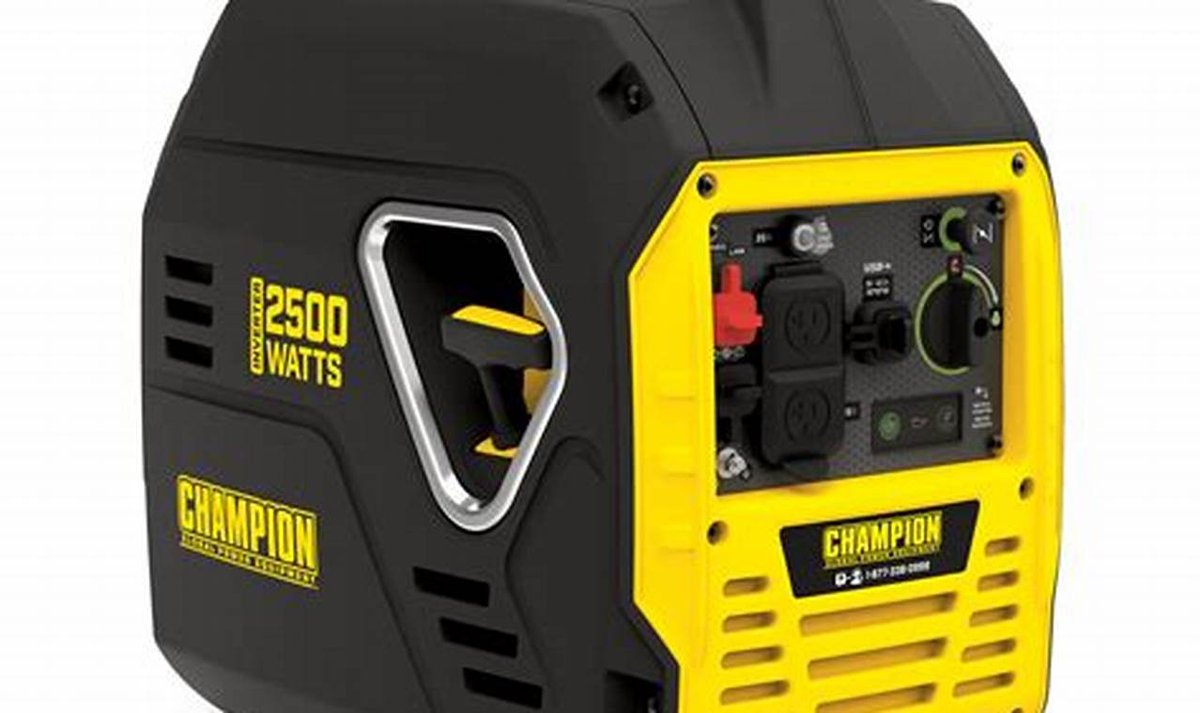
Buying Guides and Top Picks for Portable Inverter Generators: Your Essential Power Companion
Imagine the hum of a reliable power source keeping your lights on during a blackout, your RV humming in a remote campsite, or your power tools buzzing on a job site far from grid access. That’s the promise of a portable inverter generator. But with so many options, how do you cut through the noise (pun intended!) and choose the right one for your specific needs? This comprehensive guide will walk you through everything, from understanding the tech to picking a top-rated model, ensuring you invest in power you can trust.
At a Glance: Why Inverter Generators Are a Smart Choice
- Clean, Stable Power: Safe for sensitive electronics like laptops and medical devices.
- Whisper-Quiet Operation: Much quieter than traditional generators, typically 50-60 decibels.
- Fuel Efficient: Only burn fuel as needed, saving you money and trips to the gas station.
- Lighter & More Compact: Easier to transport and store, often in "suitcase" style.
- Eco-Friendly: Lower emissions thanks to advanced technology.
- Versatile: Perfect for camping, RVs, tailgating, job sites, and emergency home backup.
The Quiet Revolution: Why Inverter Generators Stand Apart
Gone are the days when a portable generator meant a roaring, gas-guzzling beast that shook the ground. Enter the inverter generator – a marvel of modern engineering that delivers usable power with a computer-controlled inverter. Unlike their traditional counterparts, these smart machines adjust their engine speed to the load, burning only the fuel necessary. This ingenious approach makes them dramatically lighter, significantly quieter (think refrigerator vs. motorcycle), and far more fuel-efficient.
More importantly, inverter generators produce a stable, "clean" current with minimal harmonic distortion, making them perfectly safe for all your sensitive electronics. Forget worrying about frying your laptop or damaging medical equipment. Whether you're powering a delicate CPAP machine during a power outage or simply enjoying a movie night under the stars in your RV, portable generators with inverter technology offer peace of mind and reliable performance.
Decoding Your Needs: Key Considerations Before You Buy
Choosing the right inverter generator isn't about finding the most powerful or the cheapest; it's about matching the machine to your specific demands. Here’s a detailed breakdown of what truly matters.
Wattage: The Power Equation
This is arguably the most critical factor. Generator wattage comes in two flavors:
- Starting/Peak/Surge Watts: The brief, higher burst of power needed to start motor-driven appliances (like refrigerators, power tools, or AC units).
- Running/Rated Watts: The continuous power needed to keep those appliances operating.
Always size your generator based on the running watts of everything you plan to power simultaneously, then add the highest starting watts of the single largest appliance you'll kick on. - Light-Duty (2,000-3,000 watts): Ideal for camping, tailgating, or powering a few essentials like lights, phone chargers, and a small TV. Think "suitcase" style models.
- Medium-Duty (3,000-4,500 watts): Perfect for RVs, larger camping setups, or emergency home backup for a refrigerator, some lights, and a few small appliances.
- Heavy-Duty/Whole-House (4,500-7,000+ watts): Can handle significant home backup, running multiple major appliances like a furnace, well pump, or central air conditioner (though you'll need to manage loads carefully). These often come with wheels due to their weight.
Pro Tip: When in doubt, size up slightly. It’s better to have a little extra capacity than to constantly trip breakers. Many manufacturers offer wattage calculators to help you estimate your specific needs.
Fuel Type & Capacity: Gas, Propane, or Both?
The fuel you choose impacts versatility, storage, and power output.
- Gasoline: The most common fuel. Generally offers higher wattage output (around 400-700 more watts) compared to propane. However, gasoline degrades over time, requiring fuel stabilizers for long-term storage and rotation every six months. Tank capacity typically ranges from 2 to 10+ gallons, directly influencing runtime.
- Propane (LPG): Burns cleaner, stores indefinitely without degrading, and is often easier to find in emergencies. Dual-fuel models, which can run on both gasoline and propane, offer incredible flexibility. While propane might provide slightly less power, its storage benefits often outweigh this for backup scenarios.
Starting Up: Electric vs. Recoil
How do you get your generator going?
- Recoil Cord (Manual Pull): The classic pull-start. Simple, reliable, and doesn't depend on a battery charge. Most smaller units feature this.
- Electric Start (Push-Button): Requires an internal battery to crank the engine. Super convenient, especially for larger units, but you'll need to ensure the battery stays charged. Many generators offer both for redundancy.
- Remote Start: Some premium models offer remote fob start, letting you fire up the generator from a distance.
Noise Level: Keeping the Peace
One of the biggest selling points of inverter generators is their quiet operation.
- Typical Range: Most inverter generators purr in the 50-60 decibel (dB) range.
- For Context: A normal conversation is around 60 dB, a refrigerator is 40 dB, a hair dryer is 90 dB, and a traditional open-frame generator can easily hit 100+ dB.
- Closed-Frame Designs: These models encapsulate the engine, further dampening sound. If quiet is paramount (e.g., camping in quiet zones, dense neighborhoods), prioritize models closer to the 50 dB mark.
Size & Weight: Portability Matters
How and where you plan to use your generator dictates its ideal dimensions and heft.
- "Suitcase" Style (40-50 lbs): These lightweight, compact units typically offer up to 2,200 watts and are easily carried by hand. Perfect for tailgating, camping, or light recreational use.
- Wheeled Units (100+ lbs): Generators producing 3,000+ watts are heavier but often include integrated wheels and handles for easier on-site movement. If your generator will live in one spot or move infrequently, these are manageable. Some smaller units even offer optional wheel kits.
Parallel Capability: Doubling Your Power
Need more juice but don't want a massive, single generator? Many inverter generators can be linked in parallel. This feature allows you to connect two like-branded generators using a parallel kit to combine their wattages, effectively doubling your output. It’s a fantastic way to scale up power as needed or to have smaller, more portable units for individual tasks.
Safety First: CO Detection & Other Safeguards
Your generator produces carbon monoxide (CO), an invisible, odorless, and deadly gas. Safety features are non-negotiable.
- Carbon Monoxide (CO) Detection: This is crucial. Modern generators equipped with CO detection will automatically shut down if dangerous levels of CO are detected. Given that generators are responsible for over 85% of non-fire carbon monoxide deaths, this feature can be a literal lifesaver.
- Low-Oil Shutoff: Protects the engine from damage by automatically shutting down when oil levels are too low.
- Overload Protection: Prevents damage to the generator and connected appliances if too much power is demanded.
CARB-Compliance: Breathing Easier
CARB-compliance means the generator meets California Air Resources Board emissions standards. These regulations are among the strictest in the world. Even if you don't live in California, a CARB-compliant generator means you're investing in a cleaner-burning, more eco-friendly machine, which benefits air quality for everyone.
Brand Reputation & Warranty: Investing in Reliability
A generator is an investment. Sticking with established manufacturers like Champion, Honda, Westinghouse, Generac, and Wen often means:
- Better Quality Control: Fewer unexpected issues.
- Stronger Warranties: Peace of mind against defects.
- Reliable Service Networks: Easier to get repairs or parts.
- Readily Available Replacement Parts: Ensures longevity.
Avoid unknown or generic brands, as savings upfront can quickly disappear with reliability issues, lack of support, or difficulty finding parts.
Hidden Costs: Beyond the Sticker Price
Factor these into your budget:
- Fuel: Gasoline or propane, and stabilizers for gasoline.
- Extension Cords: Heavy-duty, outdoor-rated cords appropriate for generator use.
- Generator Cover: Protects your investment from the elements.
- Oil: Initial fill and regular changes.
- Parallel Kit: If you plan to link two units.
- Transfer Switch/Inlet Box & Electrician Costs: If you plan to hardwire your generator to your home's electrical panel (highly recommended for home backup).
Portable Power Stations: A Fuel-Free Alternative
For truly light-duty needs like charging phones, laptops, or running a small fan, a battery-powered portable power station might be a better fit. They're silent, produce zero emissions, can be used indoors, and require no fuel or maintenance. However, they offer significantly less power and runtime compared to fuel-based inverter generators and are not suitable for major appliances or extended outages. Think of them as giant power banks, not true generator replacements for most scenarios.
Our Top Picks: The Best Portable Inverter Generators on the Market
Based on extensive expert testing and real-world evaluation by sources like Bob Vila and Wirecutter, here are some of the most reliable and highly-rated portable inverter generators available today.
Best Overall Mid-Range & RV Power: Westinghouse iGen4500 Inverter Generator
This popular model consistently earns top marks for its balance of power, features, and quiet operation. The Westinghouse iGen4500 delivers 3,700 running watts and 4,500 peak watts, making it an excellent choice for RVs, camping trips, remote powering, or emergency home backup. Its 3.4-gallon fuel tank provides an impressive runtime of up to 18 hours at a 25% load. Users appreciate its simple setup and range of outlets, including a 30A RV-ready outlet, two 20A household outlets, and two USB ports. Weighing around 105 lbs (without fuel), it’s a robust unit that’s still manageable for transport, especially with its integrated wheels. Experts laud its quiet and efficient performance.
Best Value Dual-Fuel: Pulsar 2200-Watt Dual-Fuel Quiet Inverter Generator
If you're looking for an affordable entry into the inverter generator market without sacrificing versatility, the Pulsar 2200-Watt Dual-Fuel is a strong contender. It offers 1,800 running watts (gasoline) and 1,600 running watts (propane), with 2,200 starting watts on gas. Its dual-fuel capability provides flexibility, allowing you to use whichever fuel is most convenient or available. While the oil fill port can be a bit tricky to access (requiring panel removal), initial setup is straightforward. Reviewers note it’s suitable for small tools and light-duty household needs. It’s advertised at 59 dB, making it pleasantly quiet for most uses.
Best CARB-Compliant & Feature-Rich: Generac iQ3500 Portable Inverter Generator
For those prioritizing emissions compliance and advanced features, the Generac iQ3500 stands out. This CARB-compliant generator boasts a locking 30A, 20A duplex, and two USB ports, providing ample connectivity. A clear LCD screen displays power usage and fuel levels, and it features convenient push-button ignition. Testers found it capable of handling demanding loads, easily powering two 1,500-watt space heaters simultaneously. While its 109.1 lbs weight and lack of integrated wheels can make transport challenging, its easy startup, quiet operation, and robust power delivery make it a favorite for many.
Best with Bluetooth Connectivity: Ryobi 2300-Watt Bluetooth Inverter Generator
Modern convenience meets portable power with the Ryobi 2300-Watt Bluetooth Inverter Generator. Setup is quick, often under 10 minutes, and its Bluetooth app allows you to monitor fuel levels, power output, and runtime directly from your phone (though it doesn't support remote start). Operating at a quiet 57 dB, it allows for easy conversation nearby. While it might struggle with high-draw tools like a table saw, it's perfectly suited for smaller power uses like craft festivals, tailgating, or powering lights and entertainment.
Best Compact Dual-Fuel: Champion 2000-Watt Dual-Fuel Inverter Generator
For ultimate portability combined with fuel flexibility, the Champion 2000-Watt Dual-Fuel is an excellent choice. This lightweight (39 lbs) "suitcase" style generator offers 2,000 surge watts and 1,700 running watts on gasoline, with comparable output on propane. Its 1.05-gallon gas tank provides up to 11.5 hours of runtime at 25% load, or you can run it for up to 34 hours with a 20-lb propane tank. Featuring two standard outlets and a 12V port, it's ideal for powering a few appliances and charging devices while camping or tailgating. Its manufacturer-claimed 53 dB noise level has been verified by reviewers as accurate, making it remarkably quiet.
Best Small & Reliable with CO-Minder: Honda 2200-Watt Inverter Generator (EU2200i)
Honda generators are legendary for their reliability and quality, and the EU2200i continues that tradition. Featuring Honda’s renowned GXR120 (121 cc) engine, it produces 1,800 running watts and 2,200 peak watts. Its 0.95-gallon gas tank provides 3.2 hours at max draw or an impressive 8.1 hours at 25% load. Crucially, this model includes Honda's CO-Minder�� carbon monoxide detection system for enhanced safety. Weighing around 48 lbs with a comfortable top handle, it's highly portable, making it a top pick for tailgating, camping, and remote power needs where absolute dependability is a must. Note that it typically includes one 15A 120V duplex outlet but no USB ports.
Best Overall Home Backup (Higher Wattage): Westinghouse iGen5000DFc 3900 Watt Inverter Generator
When you need more substantial home backup power, the Westinghouse iGen5000DFc delivers. This dual-fuel, closed-frame inverter model offers 5,000 starting watts and 3,900 running watts on gasoline (or 4,500/3,500 on propane). Its 3.4-gallon gas tank can provide up to 18 hours of runtime at 25% load. Equipped with CO shutoff for safety, remote start, and an LED display, it’s a feature-rich solution. Operating at a quiet 52 dB(A) and weighing around 100 lbs, it’s a powerhouse designed for serious home emergencies (note: not available in California).
Runner-Up & CARB-Compliant Home Backup: Generac iQ5200 DF 3900 Watt Dual Fuel Inverter Generator (CARB)
For a CARB-compliant alternative to the Westinghouse, the Generac iQ5200 DF is an excellent runner-up. It offers slightly higher starting watts at 5,200 (gas) and 4,700 (propane), with identical 3,900/3,500 running watts. This model features convenient upward-facing readouts, USB-A and USB-C ports, and a robust folding handle for easier maneuverability, though it lacks remote start. Its slightly smaller tank yields about 15 hours of runtime at 25% load. A newer 2025 model, it represents Generac's commitment to quiet, efficient, and compliant power.
Upgrade Pick for Serious Power: Honda U7000iSNAND 5500 Watt Electric Start Portable Inverter Generator
If budget isn't a primary concern and you demand premium performance and maximum wattage for home backup, the Honda U7000iSNAND is an investment-grade option. Producing 7,000 starting watts and 5,500 running watts, it can power most major home appliances and items. It features electric start, a Bluetooth app for real-time monitoring and service reminders, and Honda’s legendary quiet operation (52-60 dB(A)). While it's a gasoline-only model and comes with a higher price tag, its unmatched quality and reliability make it a top-tier choice for those who need uncompromising power.
Best for Minimal Backup Needs: Champion 201050 4000-Watt Dual Fuel Inverter Generator
For those who need just enough power for the bare essentials and small appliances, perhaps one at a time, the Champion 201050 is a highly portable and effective choice. This dual-fuel, closed-frame inverter with CO detection offers 4,000 starting watts and 3,000 running watts. With a runtime of 10 hours at 25% load and a weight of only about 50 lbs, it's incredibly easy to move and store. Perfect for recreational use or as a minimalist home backup.
Best for Whole-House Solutions: Champion 201175 8500 Watt Electric Start Dual Fuel Inverter Generator
When you need to power almost your entire home during an outage, the Champion 201175 steps up as a robust solution. This closed-frame inverter generator offers a formidable 8,500 starting watts and 7,000 running watts. It features electric start, dual-fuel capability, and crucial CO detection. While its 213 lbs weight makes it less portable than smaller units, it comes with wheels to aid movement and is designed for direct hookup to an electrical panel. Priced under $2,000, it offers exceptional power for its class.
Essential Accessories for Your Generator
Don't forget these crucial companions to ensure safe and efficient operation:
- No-Spill 1460 5 Gallon Gasoline Can: This highly-rated fuel can makes pouring a breeze, minimizing messes with its unique spout design and viewing slot. It's also available in 2.5-gallon and 1.25-gallon sizes. Remember to use a high-quality fuel stabilizer like Sta-Bil for long-term gasoline storage, and rotate your gas every six months to keep it fresh.
- Heavy-Duty Extension Cords: Invest in outdoor-rated cords with appropriate gauge wiring for the wattage you'll be running.
- Generator Cover: Protect your investment from rain, dust, and UV damage when not in use.
- Parallel Kit: If you've chosen two compatible generators, you'll need this to link them.
- CO Detector: Even if your generator has built-in CO detection, a separate battery-operated CO detector placed inside your home or RV is a vital backup.
Powering Up Safely: Crucial Tips
Your generator is a powerful tool, but it demands respect and adherence to safety protocols.
- Never Use Indoors: This is the most important rule. Generators produce carbon monoxide, an invisible, odorless, and deadly gas. Always operate your generator outdoors, in a well-ventilated area, at least 20 feet away from your home or any openings (windows, doors, vents). Point the exhaust away from your home and neighboring buildings.
- Keep it Dry: Protect your generator from rain or wet conditions. If you need to operate it in foul weather, use an open, canopy-style structure or a generator tent, ensuring ample airflow for exhaust.
- Read the Manual: Seriously, every generator is a bit different. Understand its specific operation, maintenance schedule, and safety warnings.
- Fuel Up Safely: Always refuel a cold generator. Spilled fuel on a hot engine can easily ignite. Store fuel in approved containers, away from living areas and heat sources.
- Test and Maintain: Run your generator regularly (e.g., once a month for 15-20 minutes with a light load) to keep the engine lubricated and fresh fuel circulating. Follow the manufacturer's recommendations for oil changes and other maintenance.
- Proper Electrical Connections: For home backup, consult a qualified electrician to install a transfer switch or an inlet box. This prevents dangerous backfeeding into the utility grid, which can injure utility workers and damage your generator. Never plug your generator directly into a wall outlet.
FAQs: Quick Answers to Common Questions
How quiet is an inverter generator compared to a regular one?
Inverter generators are significantly quieter, typically operating in the 50-60 dB range. Traditional open-frame generators often exceed 100 dB. To put it in perspective, 60 dB is a normal conversation, while 100 dB is like a motorcycle or a jackhammer.
Can I use an inverter generator indoors?
Absolutely NOT. Operating a fuel-powered generator indoors or in any partially enclosed space can lead to fatal carbon monoxide poisoning. Always operate it outdoors in a well-ventilated area, far from windows and doors.
What's the difference between starting and running watts?
Starting (or peak/surge) watts are the brief, higher burst of power an appliance needs to kick on, especially those with motors. Running (or rated) watts are the continuous power required to keep the appliance operating. When sizing a generator, you need to account for both.
How often should I run my generator for maintenance?
Most manufacturers recommend running your generator for 15-20 minutes with a light load at least once a month. This helps keep the engine lubricated, prevents fuel from sitting too long, and ensures it's ready when you need it.
Do I really need a fuel stabilizer for gasoline?
Yes, absolutely, especially for long-term storage. Gasoline can degrade and cause deposits in your fuel system in as little as 30 days. Fuel stabilizer prevents this, extending the life of your gasoline and protecting your generator's engine. Rotate stored gasoline every six months.
Making the Smart Choice: Your Power, Your Peace of Mind
Navigating the world of portable inverter generators might seem daunting at first, but by understanding your power needs, prioritizing safety, and considering the key features discussed, you can confidently select the perfect model. Whether it's for the quiet hum beside your tent, the reliable glow during an emergency, or the steady power for your remote work, a well-chosen inverter generator is an investment in convenience, security, and peace of mind. Review the top picks, consider your budget, and get ready to harness portable power for whatever comes your way.